



AI Implementation for Business Y
The integration of Artificial Intelligence (AI) into Business Y is a game-changer that promises to enhance operational efficiency, improve customer experiences, and drive data-driven decision-making. AI allows businesses to automate routine tasks, reducing human error and freeing up resources to focus on strategic initiatives. From predictive analytics to personalized marketing, AI's applications are vast and continually evolving.
With AI, Business Y can analyze large data sets to identify trends, forecast demand, and optimize supply chains. These insights will not only streamline operations but also provide a competitive edge in an increasingly data-driven market. Additionally, AI-powered chatbots and virtual assistants will enhance customer service by providing immediate responses and solutions, reducing response times, and increasing customer satisfaction.
With AI, Business Y can analyze large data sets to identify trends, forecast demand, and optimize supply chains. These insights will not only streamline operations but also provide a competitive edge in an increasingly data-driven market. Additionally, AI-powered chatbots and virtual assistants will enhance customer service by providing immediate responses and solutions, reducing response times, and increasing customer satisfaction.
By investing in AI, Business Y is positioning itself for long-term success in a rapidly changing digital landscape. However, it’s essential to manage this transformation carefully, ensuring that AI technologies are implemented ethically, with transparency and a focus on augmenting human roles rather than replacing them. The ultimate goal is to foster a collaborative environment where AI enhances human capabilities, leading to improved outcomes across all areas of the business.
As the journey toward full AI integration begins, Business Y will continue to evaluate and optimize its AI strategies to ensure maximum benefit, while remaining agile to adapt to emerging technologies and market conditions.


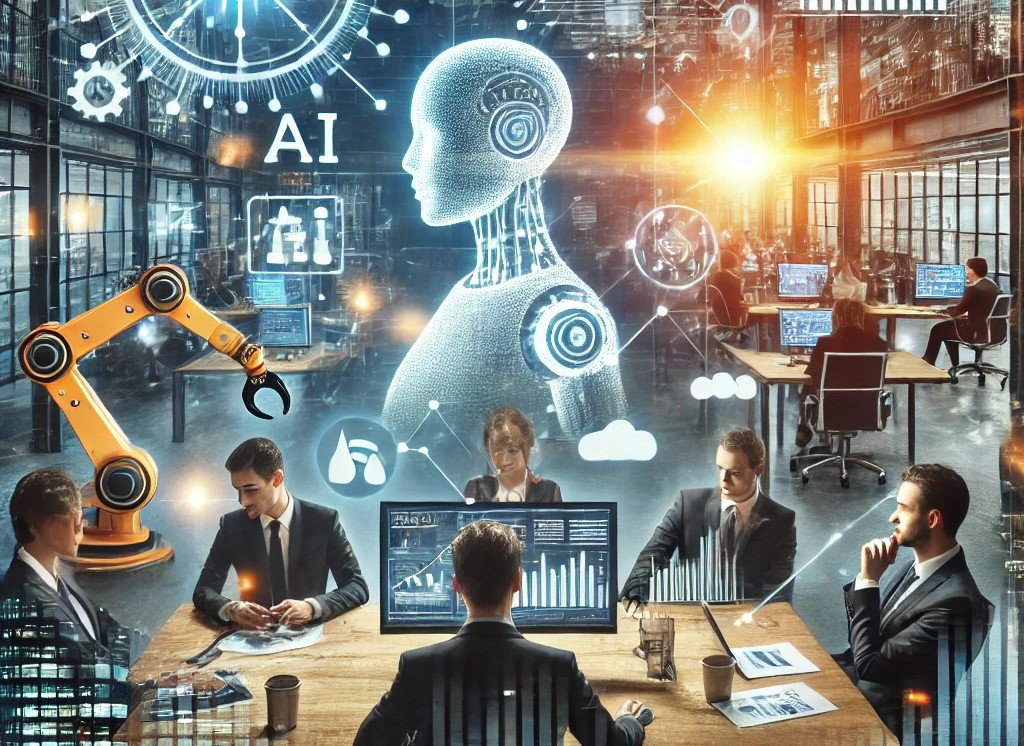
Maximizing business productivity has become a crucial aspect in today’s fast-paced corporate environment. Implementing advanced technologies, such as automation and AI, allows companies to streamline operations, reduce errors, and improve overall efficiency. These tools enable teams to focus on high-value tasks, promoting innovation and strategic growth, rather than being bogged down by routine processes. By leveraging data analytics, businesses can make informed decisions based on real-time insights, optimizing workflows and enhancing customer experiences.
Maintaining a balance between automation and human expertise is essential to ensure that the integration of technology enhances, rather than replaces, critical human elements such as creativity and decision-making. Through ongoing training and development, employees can stay ahead of technological advancements, ensuring long-term success and adaptability. Ultimately, this approach not only boosts productivity but also drives a sustainable competitive advantage in an ever-evolving marketplace.
AI technology has definitely evolved over the years, and it’s exciting to see how businesses are leveraging it to drive innovation. The potential for automation to enhance both customer experience and operational efficiency is immense. However, I do think we should always be cautious about ensuring ethical use and transparency in AI-driven decisions.
I agree with John! AI is revolutionizing industries, but there’s also the challenge of balancing human oversight with machine learning. The key is to integrate these tools without compromising the creativity and problem-solving skills that humans bring to the table.
Great points from both John and Steven! I’ve noticed that companies are increasingly focusing on AI to not only streamline processes but also improve data security. It’s important to stay updated with advancements, but also to remember the significance of human intervention when it comes to ethical decision-making in AI implementation.